Avenue of the Baobabs, Morondava: The Guide to Not Missing It (or Doing It Wrong)
Everyone has seen the photo: a red dirt track, a double row of giant baobabs, a sky turning orange. What the photo doesn't show is the road to get there, the best time to avoid sharing it with a busload of tourists, and the three other sites that make the trip genuinely worth it. We'll walk you through all of it, no Instagram filter required.
1. Why the Avenue of the Baobabs isn't "just a tree"
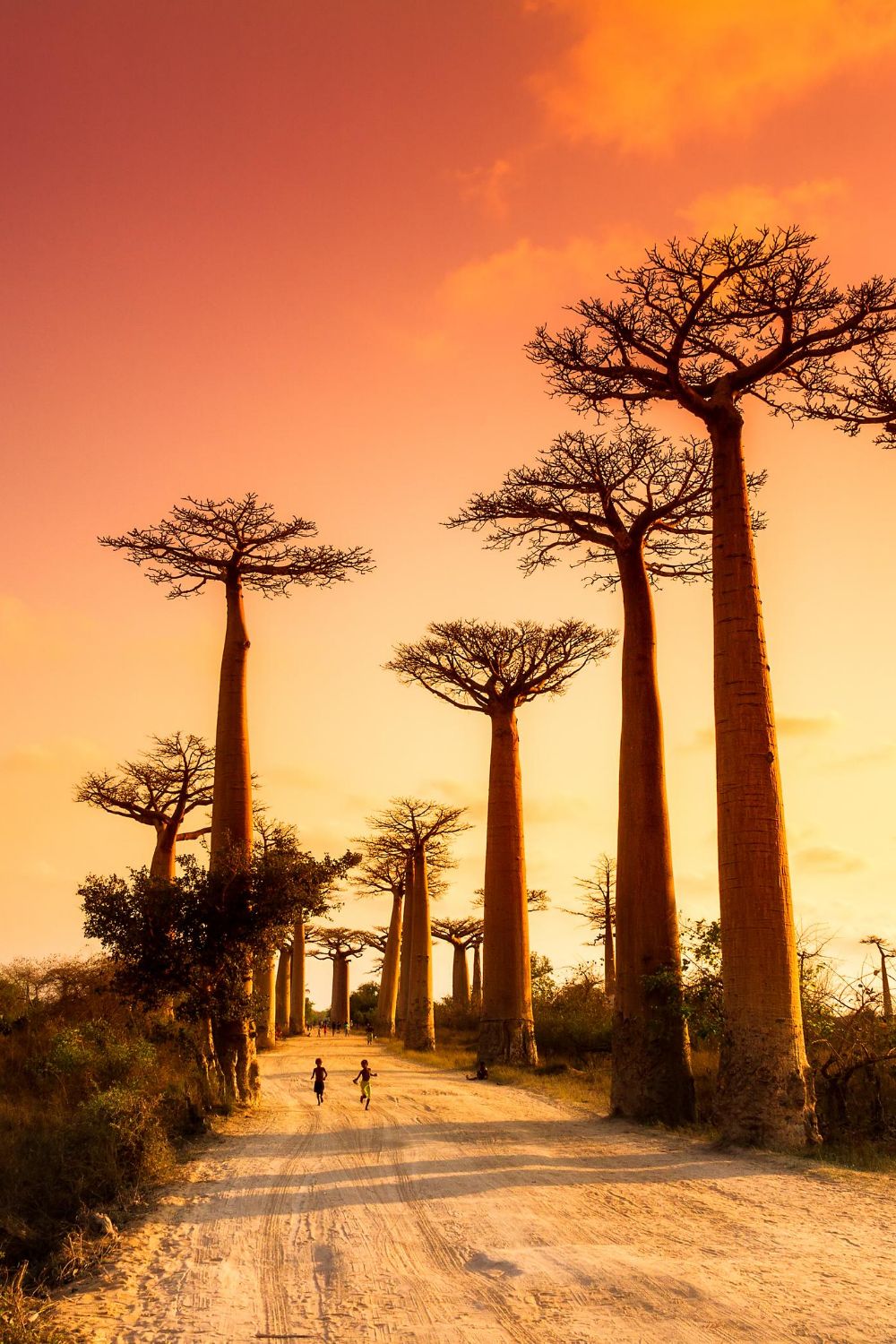
A baobab on the avenue is, on average, 800 years old. In other words, it was already fully grown before anyone had invented the selfie. These are Adansonia grandidieri, a species found nowhere else on Earth — no copy available in Thailand or Costa Rica, sorry to the comparison-shoppers.
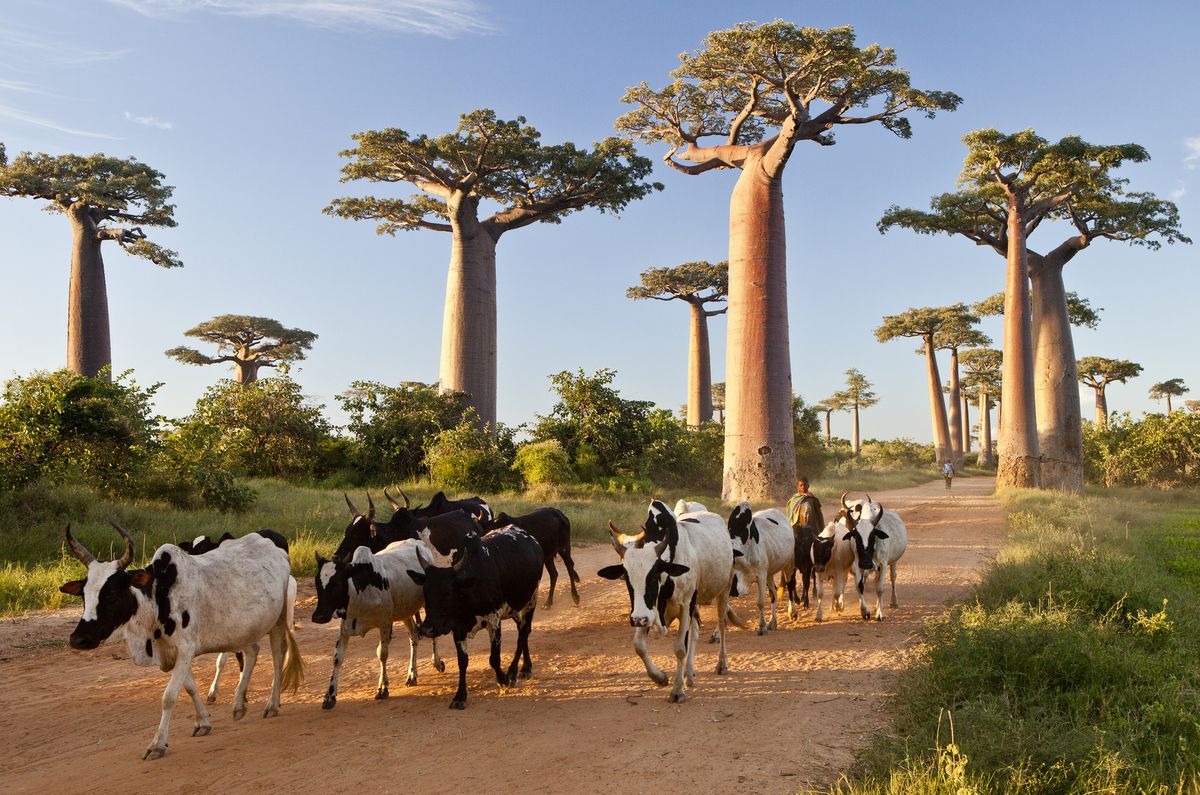
What makes the place spectacular isn't just the size of the trees, it's the geometry: a straight road, symmetrically lined, that turns any camera into a professional tool for about fifteen minutes a day. The rest of the time, it's a perfectly ordinary Malagasy country road, with zebu crossing it without a care in the world.
2. How to get there from Nosy Be or Tana
Morondava isn't directly connected by regular flight to Nosy Be, or easily to every region of the country — the most reliable way to get there is a domestic flight via Antananarivo, followed by an organized road transfer to the Avenue of the Baobabs (about 45 minutes from Morondava airport).
- Best for: travelers already combining a Nosy Be or northern Madagascar tour and looking to add a "wild West" extension.
- Duration from Tana: about 1 hour by flight, or 10 to 12 hours by road for those who want to see the country (and have the time).
- Tip: book the Tana-Morondava flight early — frequencies are limited and the planes are small, seats fill up fast in high season (July-September).
3. The typical itinerary: 4 days / 3 nights
Our most requested tour pairs the Avenue of the Baobabs with three sites you'd be wrong to skip once you're already there: the Tsingy de Bemaraha, the Manambolo Gorges and Kirindy Reserve. Here's what the four days actually look like.
| Day | Stage | Road | The highlight |
|---|---|---|---|
| Day 1 | Arrival in Morondava, check-in at the hotel (pool included) | — | First sunset over the Avenue of the Baobabs |
| Day 2 | Drive to Bekopaka by 4x4, river ferry crossings | ~7-8h with stops | Kirindy Reserve in the evening (nocturnal lemurs) |
| Day 3 | Tsingy de Bemaraha in the morning, Manambolo canoe descent in the afternoon | — | The "stone forests" and the Manambolo Gorges |
| Day 4 | Return to Morondava, one last stop at the Avenue of the Baobabs, airport transfer | ~7-8h with stops | One last coffee facing the baobabs before the flight home |
4. The Tsingy de Bemaraha, the "Indiana Jones" part
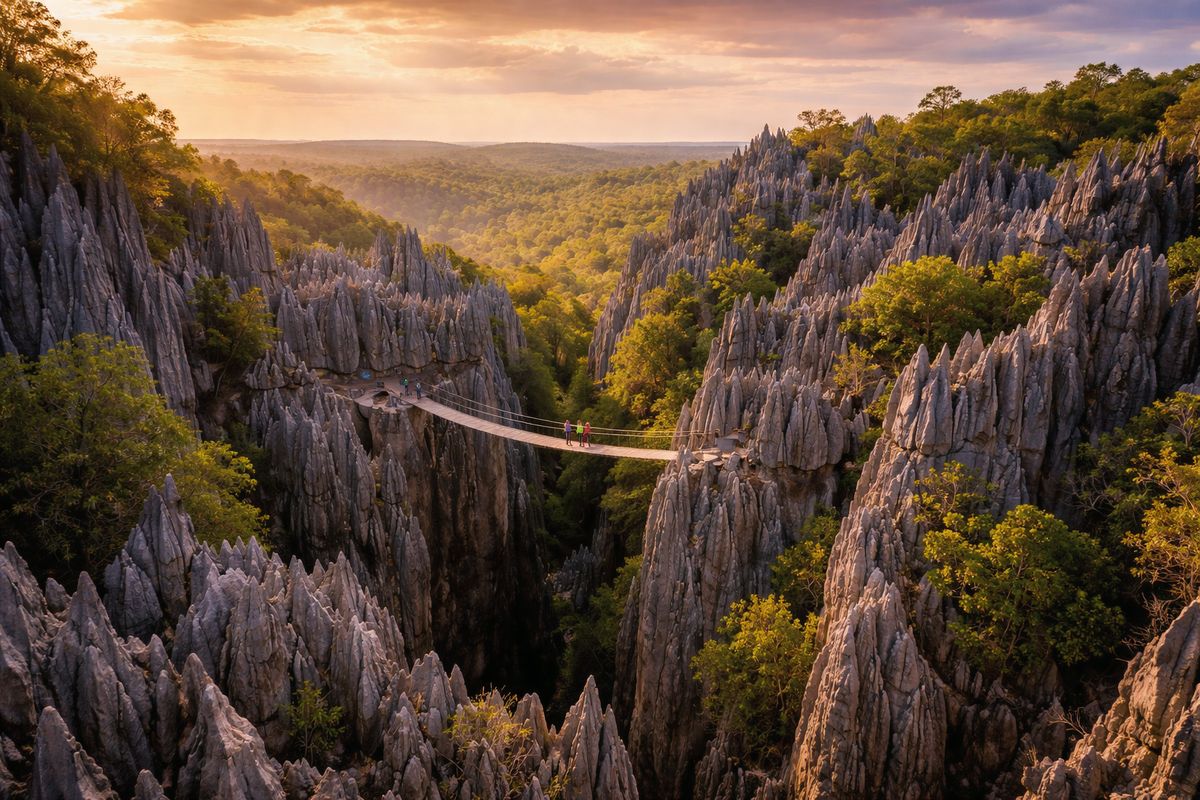
A UNESCO World Heritage site, the Tsingy de Bemaraha is a labyrinth of razor-sharp limestone blades, carved by millions of years of erosion. The word "tsingy" is said to come from an expression meaning "where you cannot walk barefoot" — the Malagasy had apparently anticipated the arrival of tourists in flip-flops.
- Best for: thrill-seekers ready for breathtaking views, harnessed climbing and via ferrata included.
- Duration: a half-day for the "hard" circuit (with suspension bridges and narrow passages), or 1.5 hours for the easy circuit, just as impressive visually.
- Tip: closed shoes are mandatory, and leave the soft backpack at the hotel — the tight passages don't forgive bulky bags.
5. The Manambolo Gorges by canoe
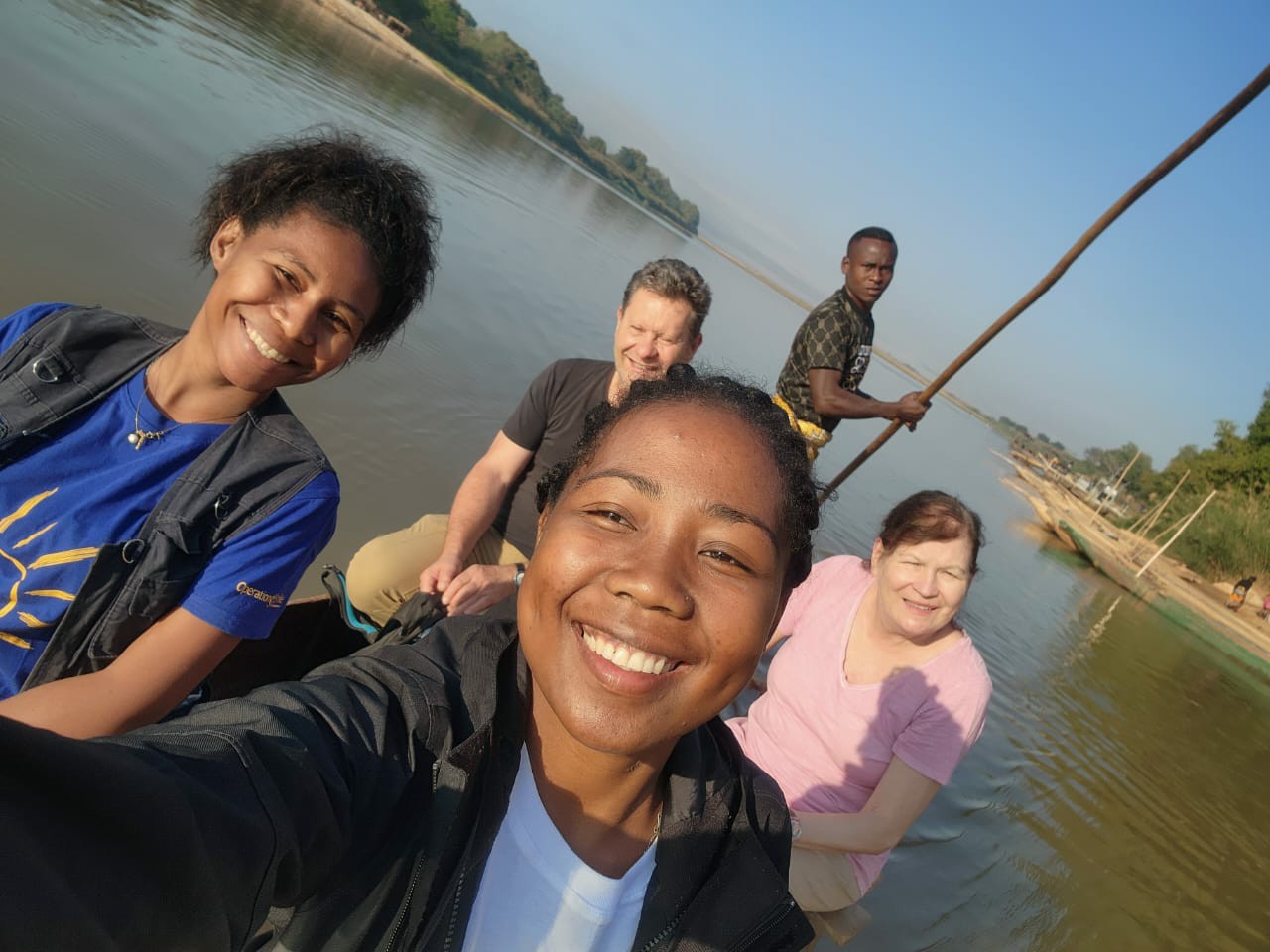
After the vertical effort of the Tsingy, it's time for a peaceful descent in a traditional canoe along the Manambolo River, hemmed in by limestone cliffs over 100 meters high. It's the moment on the tour when nobody talks, because everyone's looking up.
- Best for: a calm moment after two days of tracks and climbing — and for cliff photos that make you forget Instagram entirely.
- Duration: about 2 hours of paddling, depending on the river's level.
- Tip: bring a cap and sunscreen — there's not an inch of shade on the water before mid-afternoon.
6. Kirindy and its lemurs that never sleep
Kirindy Reserve is mostly visited... at night. It's the one place with a real chance of spotting the fossa, Madagascar's largest predator (a distant cousin of the mongoose that looks a little too much like a small puma for comfort), along with several species of nocturnal lemurs whose eyes shine like marbles under the flashlight.
- Best for: nature lovers who don't mind walking through the forest by headlamp.
- Duration: about 1.5 to 2 hours of guided night walking.
- Tip: speak quietly and avoid light-colored clothing that reflects too much light — nocturnal animals are much easier to spot in the calm.
7. Real budget: what it actually costs
From €410 per person for an organized 4-day / 3-night tour in a single room at a hotel with a pool, 4x4 transport with driver-guide, entrance fees (Tsingy, Manambolo, Kirindy) and most meals included. What's usually not included: the Tana-Morondava domestic flight, drinks and tips. We always detail exactly what's covered before confirming — no surprises on the day.
8. 5 mistakes we see every week in Morondava
After dozens of organized tours in the region, here's what comes up the most — worth avoiding if you can.
- 1. Only planning half a day. That means seeing the Avenue of the Baobabs in a rush and leaving without experiencing a third of what makes the region exceptional.
- 2. Showing up in the middle of the day for photos. At noon, the light is flat and harsh. The appointment is at sunset (or sunrise), full stop.
- 3. Underestimating the road to Bekopaka. It's not a highway. A 4x4 vehicle with a driver who knows every river ferry is non-negotiable.
- 4. Forgetting warm layers for the evening. Nights can get cool in the dry season (June-August) — a light sweater never hurts.
- 5. Booking last-minute in high season. July-September, the best hotels with pools fill up fast. Better to book a few weeks ahead.
Frequently asked questions
How much time should I plan for the Avenue of the Baobabs and Morondava?
Plan on 4 days and 3 nights to do it properly: the Avenue of the Baobabs, the Tsingy de Bemaraha, the Manambolo Gorges by traditional canoe, and Kirindy Reserve. On a single day from Morondava you'll see the baobabs but miss everything else — and everything else is the best part.
What's the best time to see the sunset over the baobabs?
Arrive about 45 minutes before sunset to have time to walk the avenue and find your spot before the other 200 people find the same one. The most spectacular light lasts about 15 minutes, from the moment the sky turns orange until the baobabs become silhouettes.
Do you need a 4x4 to get to Morondava and its surroundings?
Yes, absolutely. The road between Morondava and Bekopaka (Tsingy) crosses several river ferries and laterite tracks that become impassable after the slightest rain. Our tours include a 4x4 vehicle with an experienced driver-guide: it's not a luxury, it's a condition for arriving in one piece.
Is the Morondava - Tsingy de Bemaraha circuit suitable for families?
The Avenue of the Baobabs, Kirindy and the canoe trip on the Manambolo are all very family-friendly. The Tsingy "hard circuit", however, requires climbing with a harness and a decent level of fitness: for younger travelers, our guides always offer the easy circuit, which is just as visually impressive.
What budget should I plan for a 4-day Morondava tour?
Budget from €410 per person for an organized 4-day / 3-night tour in a single room at a hotel with a pool, 4x4 transport, driver-guide, activities (Tsingy, Manambolo, Kirindy) and most meals included. The price varies with group size and comfort level.