Tsingy de Bemaraha: The Complete Guide to Madagascar's Stone Forest
"Tsingy" means, roughly, "the place where you cannot walk barefoot." Which, looking at a forest of limestone blades sharp enough to shred a hiking boot, feels less like a translation and more like a very calm understatement. This is one of the strangest landscapes on the planet, and getting there is half the adventure — in the "we crossed a river on a wooden ferry and I'm not entirely sure it was rated for this" sense.
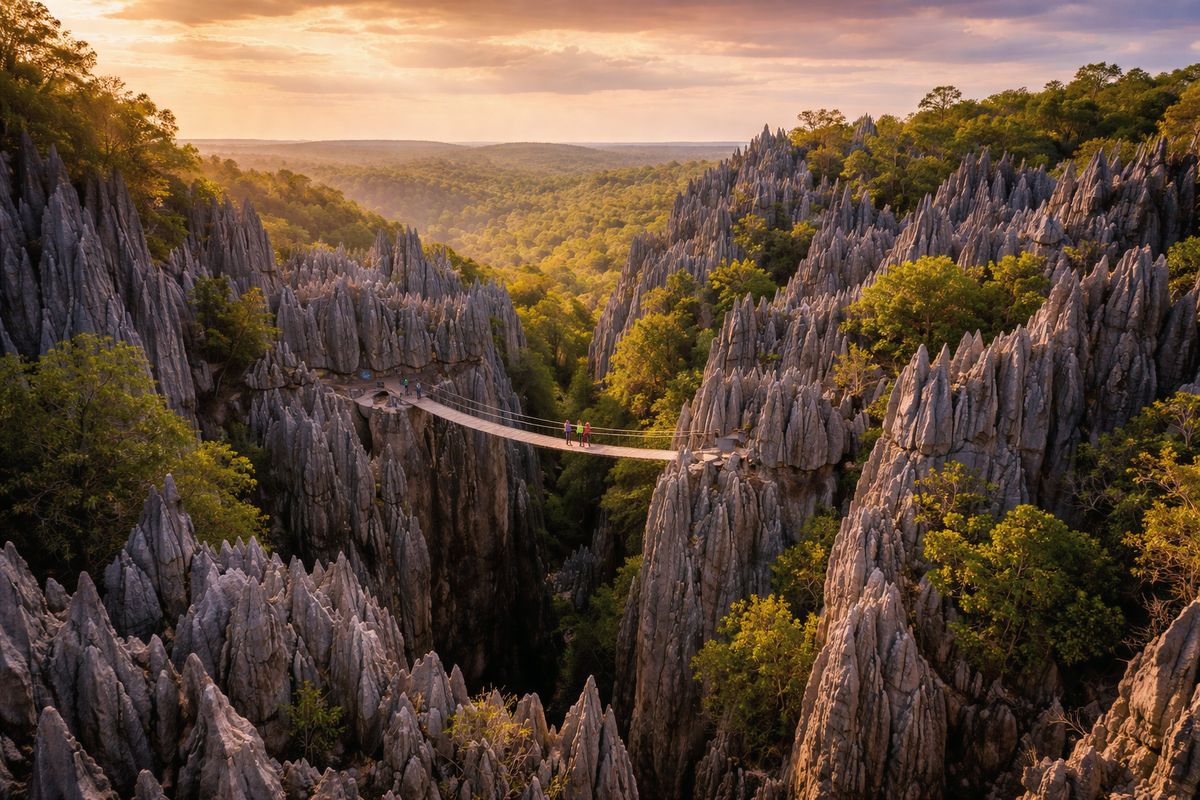
What exactly is the Tsingy?
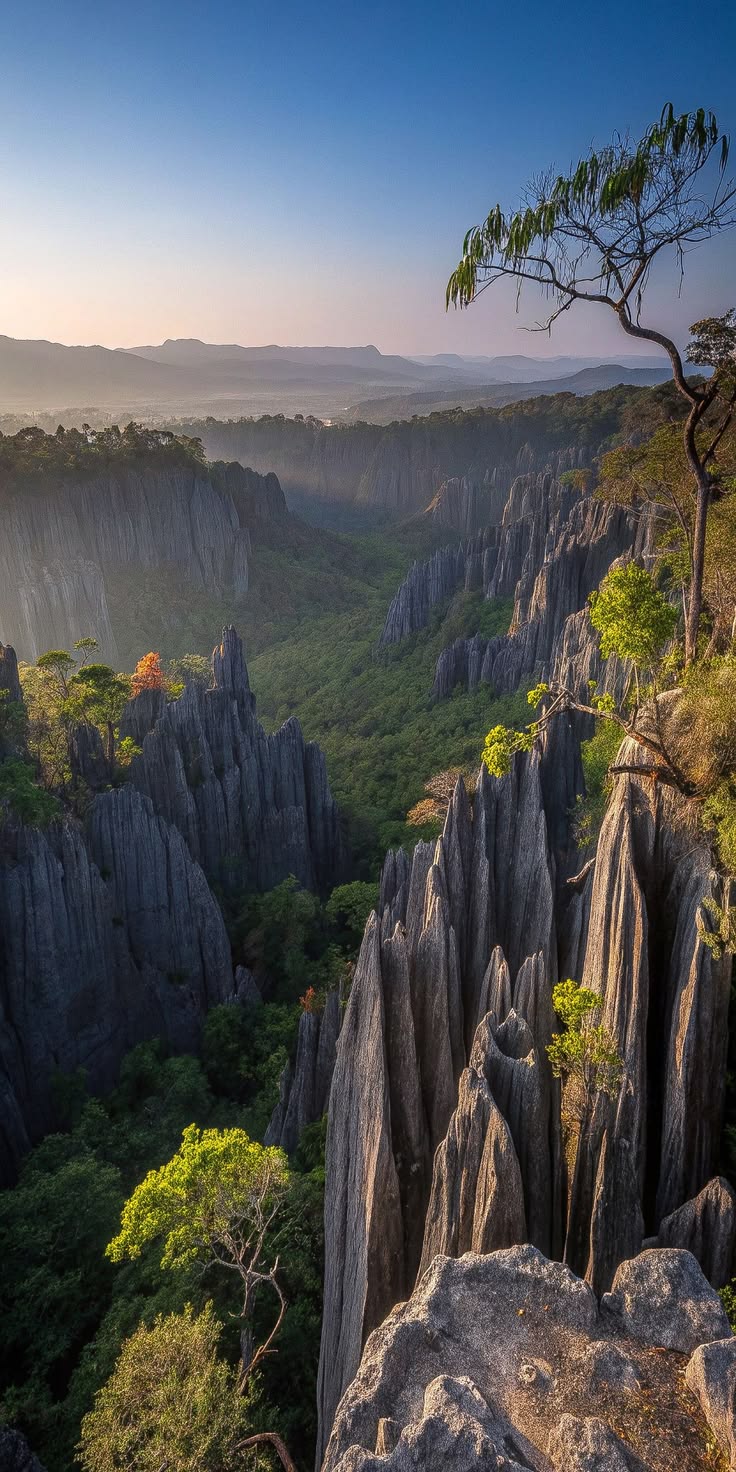
The Tsingy de Bemaraha Strict Nature Reserve is a UNESCO World Heritage site covering a vast limestone plateau in western Madagascar. Over millions of years, rainwater dissolved the soft limestone along vertical fault lines, leaving behind a labyrinth of razor-thin rock spires, deep canyons, underground caves, and hidden forest pockets where lemurs and birds live largely undisturbed — because, frankly, almost nothing else can get in there.
It looks less like a rock formation and more like a natural cathedral built by someone with a grudge against smooth surfaces.
Petit Tsingy vs Grand Tsingy
There are two distinct sectors, and choosing (or doing both) depends on your fitness level and appetite for heights.
🟢 Petit Tsingy
- Smaller, more compact formations
- Accessible on foot with light scrambling — no harness required
- Includes a scenic canoe ride on the Manambolo River
- Suitable for most travelers, including families with older children
🔴 Grand Tsingy
- The full spectacle: taller spires, deeper canyons
- Via ferrata style route with harness, carabiners, suspension bridges and metal ladders bolted into the rock
- Requires a reasonable fitness level and comfort with heights and exposed drops
- Allow half a day; the reward is one of the most dramatic panoramas in Madagascar
Our honest advice: if you only have time (or nerve) for one, and heights aren't your thing, Petit Tsingy alone is still absolutely worth the trip. If you're reasonably fit and curious, Grand Tsingy is the version people are still talking about a decade later.
How to get there from Morondava
There is no shortcut here, and that's part of the point. The Tsingy are remote by design — which is exactly why they've stayed this wild.
- Route: Morondava → Avenue of the Baobabs → Kirindy Forest → Belo-sur-Tsiribihina (river crossing by ferry) → Bekopaka (Tsingy park entrance).
- Distance/time: roughly 200 km one-way, but plan a full day of driving on unpaved tracks, often split over two days with an overnight stop.
- Road condition: rough, dusty, occasionally requiring a 4x4 — this is not a rental-sedan kind of road.
- The river crossing: vehicles and passengers cross the Tsiribihina River by ferry near Belo — an experience in itself, and a good excuse for a cold drink and some people-watching.
Most travelers combine the journey with a night walk in Kirindy Forest along the way, which conveniently turns a long transfer day into a wildlife-spotting bonus round.
Best time to visit
The Tsingy are a dry-season-only destination. The access road becomes impassable in the rainy season, and the park itself closes for part of that period.
- Ideal window: May to November
- Best months: June to September, when the road is at its driest and most reliable
- Avoid: December to April entirely — this isn't a "pack a raincoat and hope" situation, roads can genuinely become impassable
What to pack (and what not to wear)
- Closed, sturdy shoes with good grip — the rock is sharp and unforgiving on sandals or thin soles.
- Long trousers for Grand Tsingy — the via ferrata sections will scrape bare legs against rock.
- A small backpack you can climb with, rather than a bag you have to carry in your hands.
- Water and a hat — shade is limited on exposed sections, and it gets hot fast.
- A head for heights — not something you pack, but worth an honest self-assessment before Grand Tsingy.
What to combine it with
Since the Tsingy require real effort to reach, most travelers build a full west-coast loop around them:
- Avenue of the Baobabs — the iconic sunset photo, right on the way from Morondava.
- Kirindy Forest — night walks for mouse lemurs, sportive lemurs and, with luck, the fossa.
- Belo-sur-Tsiribihina — a low-key riverside town, a good overnight stop.
Realistically, budget 3 to 4 days minimum from Morondava for a Tsingy trip that includes these stops without feeling rushed.
Frequently asked questions
What is the Tsingy de Bemaraha?
A UNESCO World Heritage limestone karst landscape in western Madagascar, made of thousands of sharp vertical rock needles formed by centuries of water erosion. "Tsingy" means "where one cannot walk barefoot" in Malagasy.
What is the difference between Petit Tsingy and Grand Tsingy?
Petit Tsingy is smaller, more accessible, suitable for most fitness levels. Grand Tsingy involves via ferrata style climbing with harnesses, bridges and narrow passages, and requires a reasonable fitness level and no fear of heights.
How do you get to the Tsingy de Bemaraha?
Most visitors reach it from Morondava via a rough dirt track and a river crossing by ferry near Belo-sur-Tsiribihina, typically over 1-2 days including a stop in Kirindy Forest. The road is only passable in the dry season.
When can you visit the Tsingy de Bemaraha?
Only during the dry season, May to November. The access road becomes impassable in the rainy season.
Is the Tsingy de Bemaraha difficult to visit?
Getting there is the hardest part. Once on site, Petit Tsingy is accessible to most travelers, while Grand Tsingy requires moderate fitness and comfort with heights.