Madagascar in 3 weeks: a slow travel itinerary that doesn't rush
Madagascar punishes hurried travellers. The island is 1,600 km long, roads are slow, domestic flights get delayed, and the best moments, a market morning, an indri calling at dawn, an evening in a fishing village, never happen on a tight schedule. More and more travellers now come for longer and see less, but see it properly. Here is our 21-day slow travel itinerary, with fewer bases, shorter drives and time to actually be somewhere.
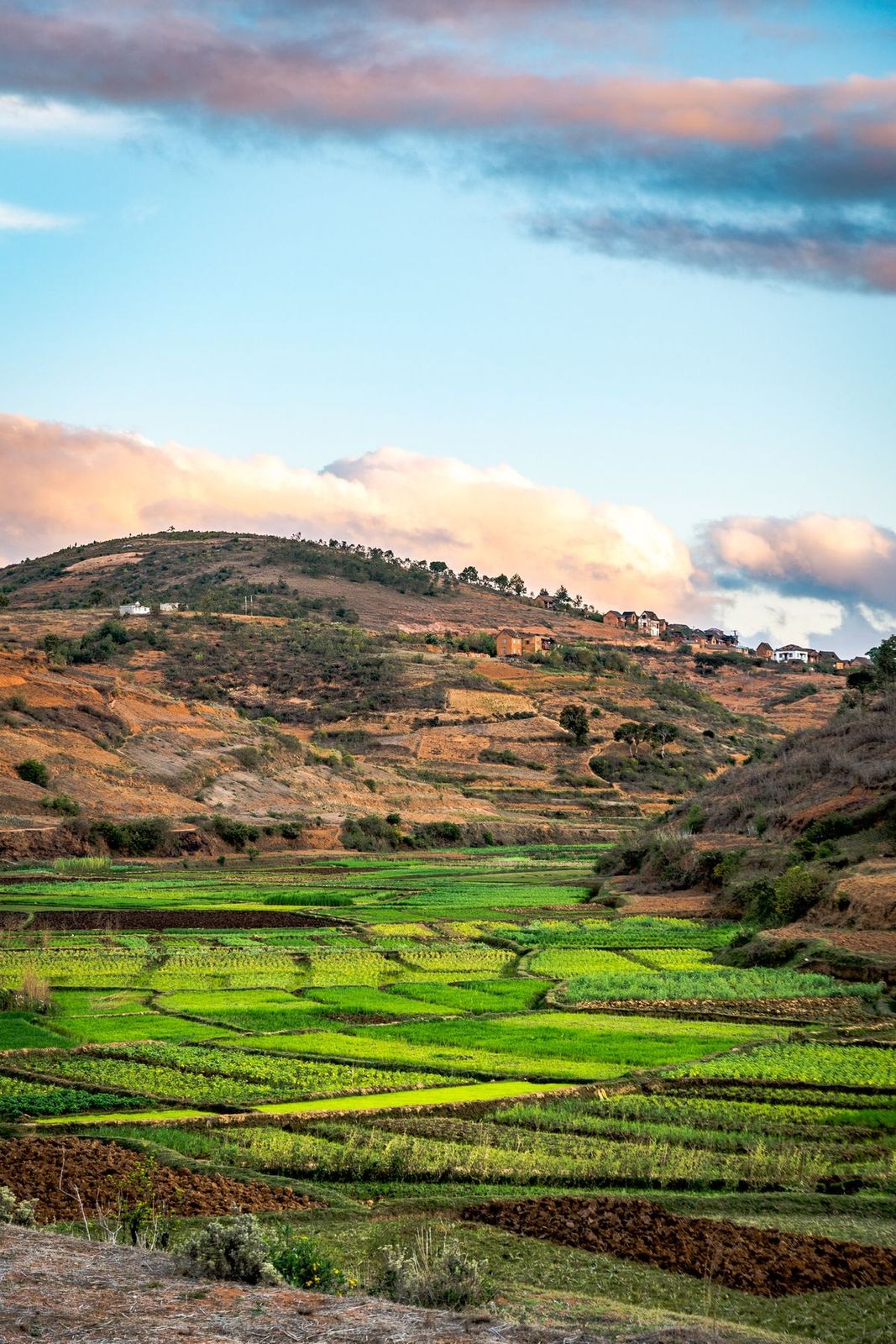
Why slow travel works so well in Madagascar
On a map, Antananarivo to Isalo looks like a long day. In reality it is several days of driving, and parts of the main road were badly degraded in 2025–2026. Trying to combine the north, the west and the south in two weeks usually means seeing Madagascar mostly through a car window or from an airport bench.
Slow travel turns that constraint into the point of the trip. Staying two to four nights in each place gives you time for a second walk in the forest when the first one was rainy, for a local market, for a conversation with your guide that goes beyond the itinerary. It is also the way of travelling that spreads your spending across more villages and local guides.
Our 5 slow travel rules
- Fewer bases, more nights. Two to four nights per stop rather than a new hotel every evening.
- No drive over about six hours. And always in daylight: we never drive at night.
- One region, explored properly. Three weeks is enough for the highlands, the RN7 and the south-west coast without a single rushed day.
- A buffer day before your international flight. Domestic flights can be delayed; your flight home should never depend on them.
- Unplanned time. At least one free half-day every few days, for the things you will only discover once you are there.
The 21-day itinerary, day by day
This route follows the highlands and the RN7 to the south-west coast. Driving times are approximate and depend on road conditions on your dates.
| Days | Base | Nights | Highlights |
|---|---|---|---|
| 1 | Antananarivo | 1 | Arrival, rest |
| 2–3 | Andasibe | 2 | Indri, night walk, Peyrieras reserve |
| 4 | Antananarivo | 1 | Easy day back, old town |
| 5–6 | Antsirabe | 2 | Pousse-pousse, workshops, countryside |
| 7 | Ambositra | 1 | Woodcarving, Zafimaniry craft |
| 8–10 | Ranomafana | 3 | Rainforest, golden bamboo lemur, night walk |
| 11–12 | Ambalavao | 2 | Anja reserve, Antaimoro paper, zebu market |
| 13–15 | Isalo (Ranohira) | 3 | Canyons, natural pools, sunsets |
| 16–19 | Ifaty or Anakao | 4 | Lagoon, Vezo villages, baobab forest |
| 20 | Antananarivo | 1 | Flight from Toliara, buffer day |
| 21 | — | — | International departure |
Days 1–4: Antananarivo and Andasibe
After the long-haul flight, a quiet first night in the capital. Then about 3–4 hours east to Andasibe, home of the indri, the largest living lemur, whose call carries for kilometres through the forest. Two nights let you do a morning walk in the park, a night walk for mouse lemurs and chameleons, and a visit to the Peyrieras reserve without rushing. Day 4 is an easy drive back to Antananarivo, so you start the RN7 rested.
Days 5–7: Antsirabe and Ambositra
Two nights in Antsirabe, the highland spa town of colourful pousse-pousse, gives you a full day to explore the workshops and the surrounding villages at your own pace. Next comes Ambositra, the woodcarving capital, in the region of the Zafimaniry, whose woodcrafting knowledge is recognised by UNESCO.
Days 8–10: Ranomafana
Three nights in the rainforest is where slow travel really pays off. Weather in Ranomafana can change fast: with three nights you can choose the best morning for the long walk, add a night walk, and still have a quiet afternoon. The park is part of the UNESCO-listed Rainforests of the Atsinanana and is famous for the golden bamboo lemur.
Days 11–12: Ambalavao and Anja
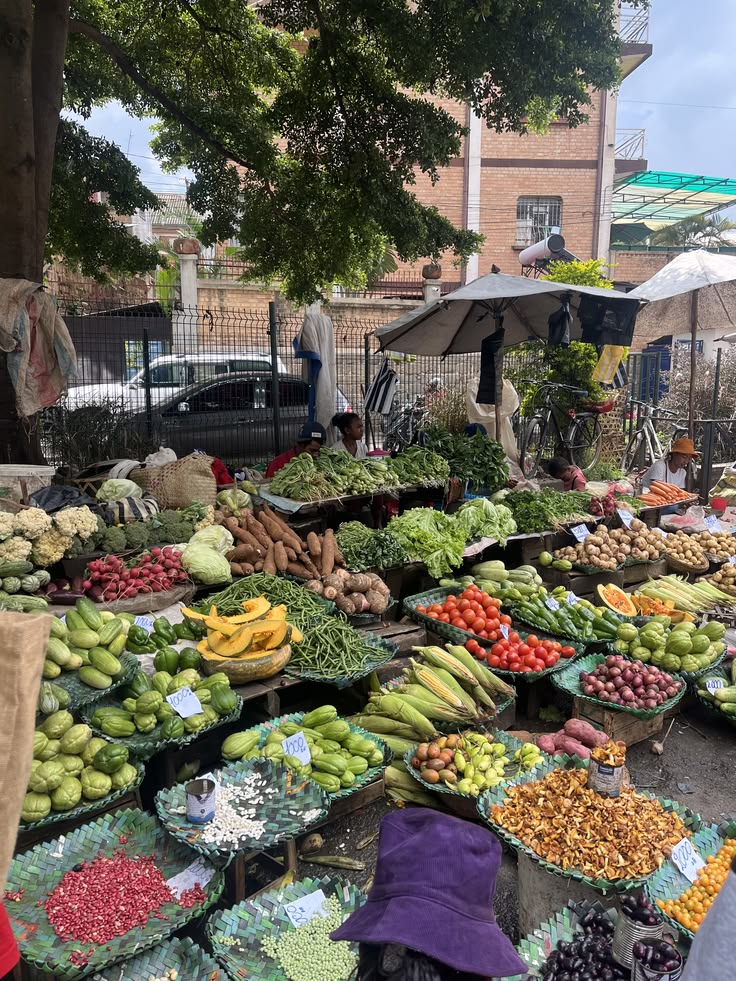
Through Fianarantsoa to Ambalavao, a small highland town with carved wooden balconies. Visit the workshop of Antaimoro paper, a traditional paper set with pressed flowers, and, if your dates allow, the weekly zebu market, one of the most striking scenes of the south (your guide will confirm the current market day). About 13 km away, the Anja Community Reserve, run by a village association, shelters around 300 ring-tailed lemurs among granite boulders.
Days 13–15: Isalo
Three nights in Ranohira means two full days in Isalo National Park and a spare day. Walk the Canyon des Makis and climb to the Piscine Naturelle on the first day, go deeper to the black and blue pools on the second, and keep the third for rest, a gentle walk or the sunset at the rock "window". Read our full Isalo and RN7 guide for the hikes and road conditions.
Days 16–19: Ifaty or Anakao
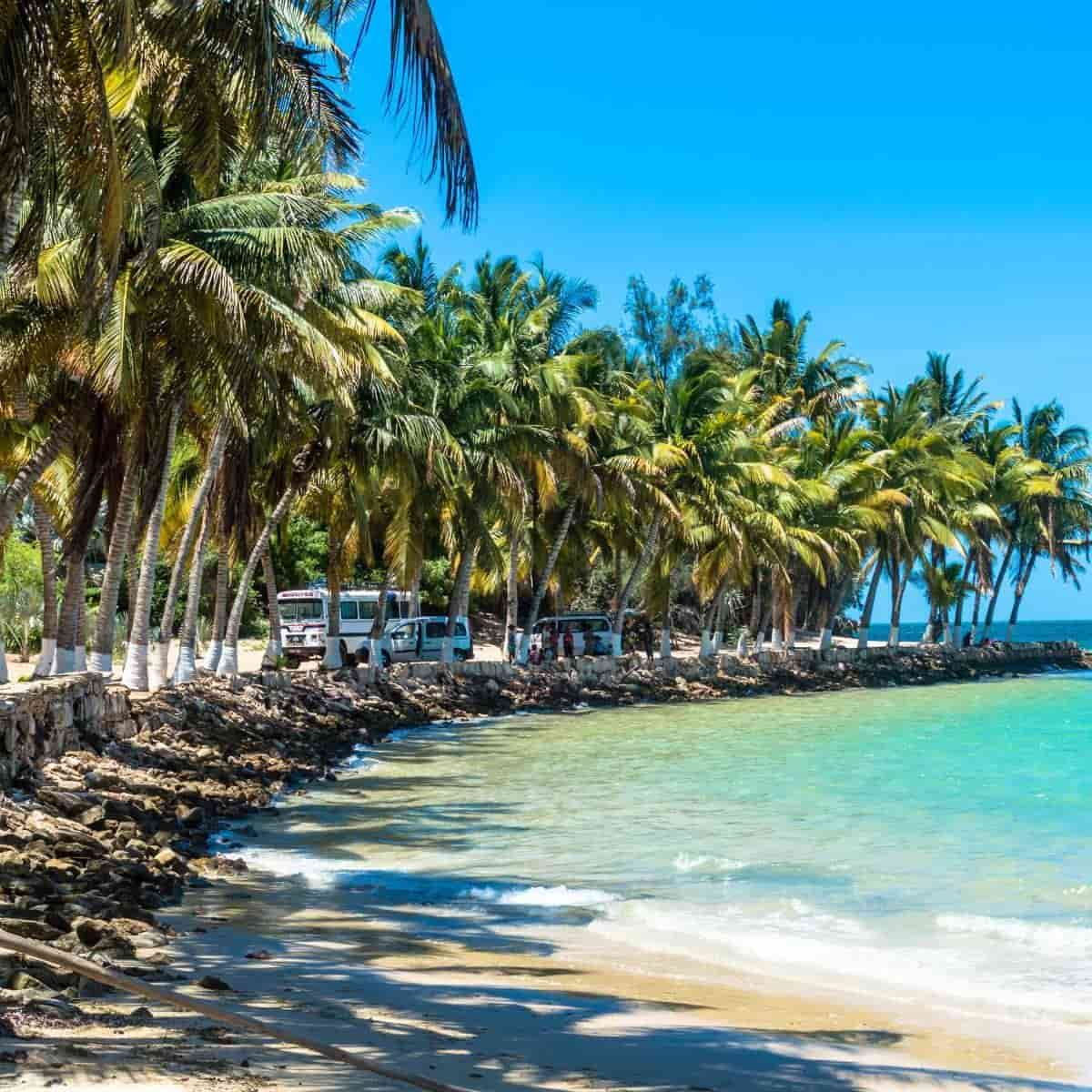
After about 4–6 hours to Toliara (longer on damaged sections), four nights by the sea. Ifaty offers a lagoon, Vezo fishing villages and the baobab forest; Anakao, reached by boat from Toliara, is quieter and more remote, with excursions to Nosy Ve. Our Tuléar–Ifaty–Anakao programme (8 days / 7 nights, from €790 per person) can also be booked on its own.
Days 20–21: back to Antananarivo
Fly from Toliara to Antananarivo the day before your international flight. If the domestic flight is delayed, you still make it home.
Variants: whales, the north or the west
- July to September: whales. Replace the beach days with three or four nights in Sainte-Marie for humpback whale watching. See our whale watching guide.
- The north instead of the south: Nosy Be, the nearby islands and Diego Suarez make an equally slow three weeks, with more beach and fewer long drives. Read our northern Madagascar road trip.
- The west (dry season only): the Avenue of the Baobabs, Kirindy and the Tsingy de Bemaraha need four to five days on their own. They fit a three-week trip if you drop part of the RN7. See our Tsingy guide.
Only have 10 to 15 days? Use the same rules on a shorter route with our 10-day itineraries.
Living it locally (and responsibly)
- Choose community-run sites like Anja, where entry fees fund village projects.
- Visit parks with accredited local guides. They are mandatory in most parks, and they are the ones who find the lemurs and chameleons.
- Buy crafts directly from the workshops, in Ambositra or Ambalavao, rather than from resellers.
- Learn a few words of Malagasy: "Salama" (hello) and "Misaotra" (thank you) open a lot of doors.
- Eat in local hotely as well as in hotels: rice and zebu stew for a few dollars, and the chance to eat when and where Malagasy people do.
Budget for 3 weeks
A slow trip is not necessarily more expensive per day: fewer hotel changes, fewer domestic flights and shorter drives keep costs steady. As a rough guide, using the daily ranges from our budget guide:
- Mid-range ($80–150 per person per day): about $1,700–3,150 on the ground for 21 days.
- Comfort ($150–300 per person per day): about $3,150–6,300.
- Private vehicle with driver: about €60–120 per day excluding fuel, shared between passengers. Over three weeks, this is the biggest single item, which is why travelling as two or more makes a real difference.
- Park fees: from 1 November 2026, Isalo costs 130,000 Ar and Andasibe (Analamazaotra-Mantadia) 90,000 Ar per person per day for a foreign visitor, plus local guides. Details in our park fees guide.
- One domestic flight (Toliara → Antananarivo): about $170–280.
These are indications, not a quote: your real budget depends on accommodation, group size and season.
When to go
The dry season, roughly April to November, is the most comfortable time for this route: clearer skies, more reliable roads and easier forest walks. July and August are peak season; May–June and September–October are quieter, often cheaper, and still dry. For month-by-month details, read when to visit Madagascar.
Frequently asked questions
Is 3 weeks enough for Madagascar?
Three weeks is enough to explore one or two regions properly, for example the highlands, the RN7 and the south-west coast, at a slow pace. It is not enough to see the whole island without spending most of your time in transit.
What is slow travel in Madagascar?
It means fewer bases and more nights in each place, drives of no more than about six hours in daylight, buffer days around domestic flights, and time for markets, villages and repeat walks in the parks.
What is the best 3-week itinerary for a first trip to Madagascar?
A classic slow route is Antananarivo, Andasibe, Antsirabe, Ambositra, Ranomafana, Ambalavao and Anja, Isalo, then four nights on the coast at Ifaty or Anakao, with a flight back from Toliara the day before your international departure.
How much does a 3-week trip to Madagascar cost?
As an indication, about $1,700 to $3,150 per person on the ground for a mid-range trip ($80 to $150 per day), and $3,150 to $6,300 for a comfortable one, excluding international flights. A private vehicle with driver costs about €60 to €120 per day excluding fuel, shared between passengers.
When is the best time for a slow trip to Madagascar?
The dry season, roughly April to November. May to June and September to October are quieter and often cheaper than the July–August peak. From July to September you can add whale watching in Sainte-Marie.